
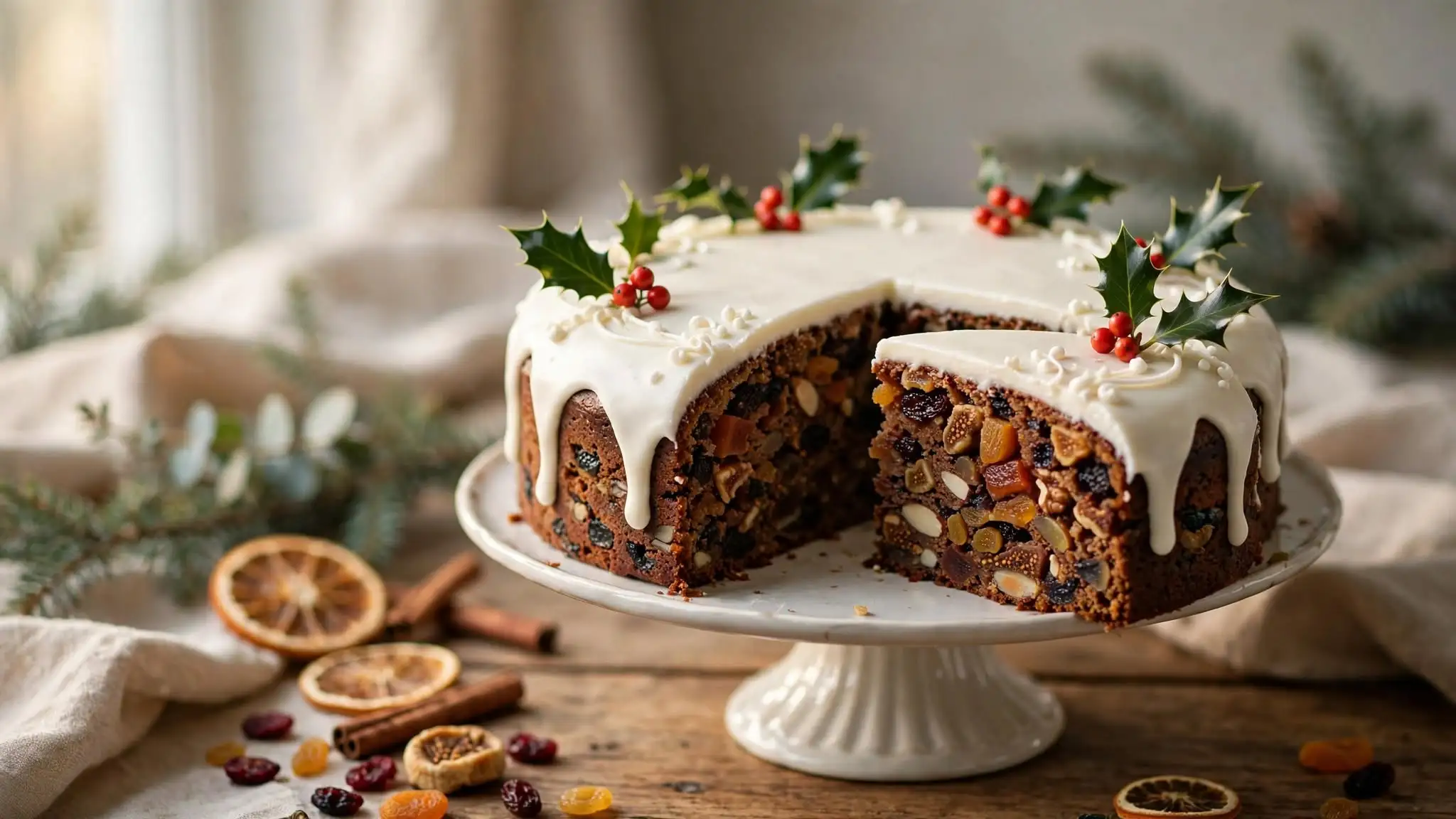
Christmas Cake Guide: How to Make a Traditional Holiday Fruit Cake
A traditional Christmas cake is a rich, dense fruit cake made with soaked dried fruit, candied peel, warm spices, and often nuts. Unlike a light holiday sponge, it is designed to be baked ahead, stored carefully, and sliced into small portions throughout the holiday season.
This guide explains how to make Christmas cake, why each stage matters, and how to store, freeze, feed, and decorate it. It is a general guide rather than a complete tested recipe. For exact ingredient amounts, pan size, oven temperature, and baking time, use a trusted, tested Christmas cake recipe.
Using This Christmas Cake Guide
If you already have a trusted Christmas cake recipe, use this guide to understand each stage: soaking fruit, lining the pan, baking, cooling, storing, feeding, freezing, and decorating.
If you do not yet have a recipe, choose one that includes verified ingredient weights, pan size, oven temperature, baking time, yield, and storage instructions. A traditional Christmas cake recipe should also state whether it uses alcohol, juice, or tea and whether marzipan and royal icing are part of the intended finish.
This page explains the method and decisions behind a traditional Christmas fruit cake. It does not provide a complete tested recipe, so it does not include invented ingredient amounts or baking times.
What Is a Christmas Cake?
A Christmas cake is a celebration fruit cake with British and Irish roots. It contains much more fruit than a standard layer cake, so the batter is thick and the finished crumb is moist, firm, and sliceable.
It differs from many American-style fruitcakes in emphasis rather than in every detail. A traditional Christmas fruit cake usually highlights plump soaked dried fruit, citrus peel, and spices, while some American fruitcakes rely more heavily on candied fruit and nuts.
It also differs from a holiday sponge cake. A sponge is airy and best eaten soon after baking; a Christmas cake is dense, keeps better when wrapped properly, and often improves in flavor after a rest period.
Ingredients You Will Need
Exact quantities depend on the recipe you choose, but most traditional Christmas cakes include the following ingredient groups.
Dried fruit
Common choices include raisins, sultanas, currants, chopped dates, dried apricots, dried cranberries, and glacé cherries. The fruit provides sweetness, chew, and much of the cake’s moisture.
Chop larger dried fruit into pieces roughly the size of raisins. Evenly sized pieces distribute better through the batter and are less likely to sink or leave large wet pockets.
Candied peel and citrus
Candied orange or lemon peel adds bright citrus flavor and a chewy texture. Fresh orange or lemon zest can deepen the flavor without adding extra moisture.
If you dislike candied peel, choose a recipe that uses additional dried fruit or citrus zest instead. Do not simply omit it without adjusting the recipe, because it contributes both flavor and bulk.
Nuts
Chopped almonds, walnuts, pecans, or hazelnuts add texture and richness. They are optional, and many recipes work well without them.
For a nut-free cake, choose a recipe formulated without nuts rather than assuming a direct one-for-one substitution. Nuts affect texture, moisture, and structure.
Alcohol or a non-alcohol soak
Soaking dried fruit before baking helps it absorb liquid, which supports a moister finished cake. Brandy, dark rum, sherry, and bourbon are traditional choices; orange juice, apple juice, or strong brewed tea are common alcohol-free alternatives.
Alcohol can contribute flavor and help an un-iced cake keep well when stored correctly. It does not make a cake safe for indefinite room-temperature storage. Storage time depends on the full recipe, moisture level, wrapping, and handling.
Spices and flavorings
Cinnamon, nutmeg, allspice, ginger, cloves, vanilla, and citrus zest are common flavor additions. Use the spice amounts in your chosen recipe; dense fruit cakes can become muddy or overly bitter when spices are increased without adjustment.
Allergen note: A typical Christmas cake contains wheat, eggs, and dairy. It may also contain nuts, alcohol, and sulfites in some dried or candied fruit. Reading labels helps identify ingredients, but it does not guarantee that a product is free from cross-contact.
Equipment for Christmas Cake
- A sturdy round or square cake pan in the size specified by your recipe
- Parchment paper for lining the base, sides, and outside of the pan
- A large mixing bowl for soaking and combining the fruit
- An electric mixer for creaming butter and sugar
- A flexible spatula for folding in the fruit and batter
- A thin skewer or cake tester for checking doneness
- An airtight container or cake tin for storage
A kitchen scale is especially useful for fruit cakes. Small differences in fruit, flour, and liquid can noticeably affect how dense and moist the finished cake is.
How to Soak Fruit for Christmas Cake
- Place the dried fruit and candied peel in a large bowl.
- Add the alcohol, juice, or tea specified by your recipe.
- Cover the bowl and let the fruit soak until plump.
- Stir once or twice during soaking so the liquid is distributed evenly.
Soaking matters because dried fruit absorbs liquid before baking, then helps keep the crumb moist as the cake bakes. Follow the soaking duration in your recipe rather than guessing; different fruits and liquids absorb liquid at different rates.
Prepare the Cake Pan
Christmas cakes bake for a long time, and exposed batter around the edges can darken or dry out. Careful lining protects the cake and makes it easier to remove.
- Grease the cake pan lightly.
- Line the bottom and sides with parchment paper.
- Extend the parchment above the rim to form a collar.
- Add an outer layer of parchment or brown paper if your recipe recommends it.
Use the pan size and shape given in the recipe. A pan that is too large makes a shallow cake that can dry out; one that is too small may overflow or need a longer bake.
Mix and Bake the Cake
- Heat the oven to the temperature stated in your chosen recipe.
- Cream the butter and sugar until light and fluffy.
- Add the eggs gradually, mixing after each addition.
- Fold in the dry ingredients just until no visible dry flour remains.
- Stir in the soaked fruit, peel, zest, spices, and optional nuts.
- Spoon the thick batter into the prepared pan and smooth the top.
- Bake according to the recipe’s temperature and timing.
The batter should be stiff and packed with fruit. That density is intentional: it supports the fruit, creates a sliceable texture, and helps the cake store well. Avoid adding extra liquid to make it resemble a standard cake batter.
Bake low and slow
Dense fruit cakes generally benefit from a lower oven temperature and a longer bake than a sponge cake. Gentle heat gives the center time to set without overbrowning the outside.
If the top begins to brown too quickly, lay a sheet of parchment loosely over the cake. Avoid opening the oven repeatedly, especially early in the bake.
How to Check for Doneness
Insert a thin skewer into the center of the cake. It should come out clean or with a few dry crumbs, without wet batter.
Fruit can leave residue on a skewer, so test in more than one place if the result is unclear. If your recipe provides an internal-temperature target, use an instant-read thermometer inserted into the center.
Cool the Cake Completely
- Leave the baked cake in its pan to cool.
- Let it cool completely before removing the parchment.
- Peel away the lining only after the cake is fully cool.
Cooling fully helps the delicate fresh crumb set and reduces the chance of the cake breaking. Wrapping a warm cake can also trap steam and make the wrapping damp.
How to Store Christmas Cake
Once completely cool, wrap the un-iced cake tightly in parchment paper, then in foil or wax paper. Place it in an airtight container in a cool, dark, dry place away from the oven, stove, and direct sunlight.
Follow the storage window in your specific recipe. Dense fruit cakes can keep well when tightly wrapped, but safe storage time depends on the full recipe, moisture level, alcohol content, handling, and whether the cake has been iced.
Juice-soaked cakes generally need more cautious storage than alcohol-containing cakes. If your recipe uses juice, follow its refrigeration instructions, especially if you plan to keep the cake beyond a few days.
Feeding Christmas Cake with Alcohol or Syrup
Feeding means adding a small amount of liquid to the wrapped cake during storage. It can add flavor and help prevent dryness.
- Prick the top of the cooled cake with a skewer.
- Brush or spoon on a small amount of brandy, rum, sherry, or flavored syrup.
- Let the liquid absorb before rewrapping the cake tightly.
- Repeat only as often as your recipe directs.
Use restraint. A cake that feels wet, heavy, or overly damp has received too much liquid. For an alcohol-free Christmas cake, use a light syrup or juice instead, and follow the recipe’s refrigeration guidance.
How to Freeze Christmas Cake
Freeze an un-iced Christmas cake for the best texture. Wrap the completely cooled cake tightly in parchment, then foil, and place it in a freezer-safe container or heavy freezer bag.
Thaw the cake while still wrapped, ideally in the refrigerator or another cool place. Once thawed, unwrap it only when you are ready to feed, serve, or decorate it.
For best quality, use frozen cake within the time recommended by your recipe or a reliable food-storage guide. Freezing preserves quality; it does not improve a cake that was dry or poorly wrapped before freezing.
Make-Ahead Planning
Christmas cake suits advance baking because its flavor often mellows and develops during storage. How far ahead you can make it depends on the recipe, the amount of alcohol, and your storage conditions.
- Bake ahead: Follow the timeline in your recipe; many bakers make fruit cakes weeks before serving.
- Store carefully: Keep the un-iced cake tightly wrapped and protected from heat, light, and drying air.
- Feed only if desired: Add small amounts of alcohol or syrup according to the recipe, then rewrap.
- Decorate near serving: Add marzipan and icing closer to the time you plan to serve or gift the cake.
Christmas Cake Decorating Ideas
Marzipan and royal icing are finishing layers, not part of the cake itself. You can serve Christmas cake plain, dust it with powdered sugar, or decorate it traditionally.
Apply marzipan
- Brush the cooled, un-iced cake with a thin layer of warmed apricot jam or another neutral jam.
- Roll marzipan into an even sheet.
- Drape it over the cake and smooth the top and sides.
- Trim the excess and let the marzipan dry before icing.
The jam helps the marzipan adhere and keeps loose crumbs out of the covering. Letting it dry before royal icing helps the icing spread smoothly.
Use a safer royal icing
Royal icing is a firm-drying icing commonly used to cover and decorate Christmas cakes. Traditional versions use raw egg whites, which can carry Salmonella risk. For an icing that will not be cooked, use pasteurized in-shell eggs, pasteurized liquid egg whites, meringue powder, or dried egg whites.
Follow the package directions for the egg product or meringue powder you choose. Keep unused royal icing covered so it does not dry out, and refrigerate any icing or decorated cake if its specific ingredients or manufacturer instructions require refrigeration.
Simple decorating alternatives
- Dust the cooled cake with powdered sugar.
- Brush the top with warmed apricot jam and arrange dried fruit or nuts on top.
- Drizzle with a simple powdered-sugar glaze.
- Cover with marzipan only, leaving it plain for a less sweet finish.
Troubleshooting Christmas Cake
- Dry cake: The fruit may have been under-soaked, the pan may have been too large, or the cake may have baked too long. Next time, soak the fruit fully, use the specified pan, and begin checking doneness near the end of the stated bake time.
- Dark or hard edges: The pan may need more insulation, or the oven may run hot. Add an outer layer of parchment and cover the top loosely with parchment if it browns too quickly.
- Wet or sunken center: The center may not have finished setting, or the oven door may have been opened often. Bake until a center skewer tests clean and avoid frequent oven openings.
- Fruit sank: The batter may have been too thin or the fruit pieces too large. Use the recipe’s proportions and chop large fruit into smaller pieces.
- Overly damp cake: Too much liquid may have been added during feeding. Use smaller amounts, let each addition absorb, and pause feeding if the cake feels wet.
- Cracked top: A small crack is common in dense fruit cakes. Level the surface before icing, or turn the cake over before covering it with marzipan if the underside is smoother.
FAQs
Can I make an alcohol-free Christmas cake?
Yes. Soak the fruit in orange juice, apple juice, or strong brewed tea. Use a light syrup or juice instead of alcohol for feeding, and refrigerate the cake if you plan to keep it for more than a few days.
Do I have to use marzipan?
No. Marzipan is traditional in many versions, but it is optional. A plain Christmas cake, a powdered-sugar dusting, or a simple glaze all work well.
Why is my Christmas cake dense?
Density is expected. The batter contains much more fruit than a standard cake, so it bakes into a rich, moist, sliceable dessert rather than a fluffy sponge.
Can I freeze Christmas cake?
Yes. Freeze the completely cooled, un-iced cake tightly wrapped in parchment and foil, then placed in a freezer-safe container or heavy freezer bag. Thaw it while still wrapped before feeding or decorating.
How far ahead should I make Christmas cake?
Many bakers make it several weeks ahead so the flavors can develop. Use the timeline and storage instructions in your chosen recipe, since alcohol content, moisture, and wrapping affect how well the cake keeps.
Takeaway: A successful Christmas cake comes from soaking the fruit, lining the pan well, baking gently until the center is set, and storing the cooled cake tightly wrapped. Save marzipan and royal icing for the final decorating stage, and use a tested recipe for exact quantities and timings.